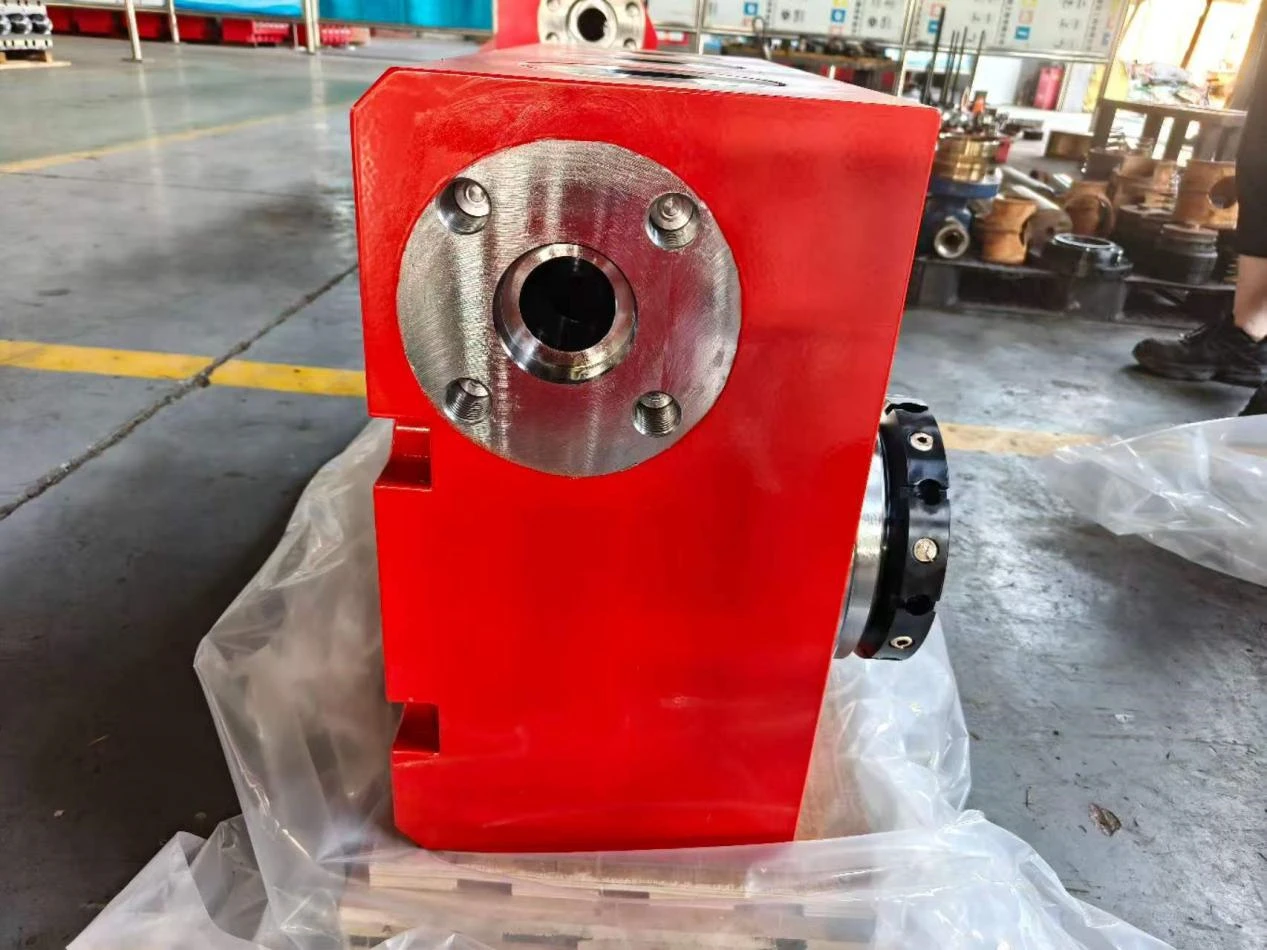
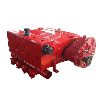
Most Youks products are applied in high-pressure liquid working conditions. All operators must complete rigorous training to operate the equipment safely, proficiently and correctly. Proper operation and regular qualified maintenance are also essential.
WARNING
Improper operation, lateral load, improper maintenance, or disassembly under pressurized state may result in personal injury or fatal accidents.
The below contents are intended to assist users in safely operating Youks products. This document is for reference reminder only and shall not replace the user's on-site existing safety specifications and operating procedures.
High-temperature Area: Under normal operating conditions of Youks well service plunger pump, working fluid temperature can reach up to 100°C. To prevent scalding injuries to personnel, the matching supplier is responsible for installing adequate prominent warning signs and arranging full protective guards around the pump fluid end and discharge manifold.
Youks well service plunger pump runs under ultra-high pressure with exposed high-speed moving parts. During pump operation, the purchaser shall post conspicuous warning labels and implement complete safety protection measures. Non-professional personnel are forbidden to approach the working zone while the pump is in service.

Staff Code of Conduct
All personnel engaged in pump operation shall wear hard safety helmets, safety goggles and certified safety footwear. Hammering any component may produce flying debris or metal shavings.
If hammering is required, strike only on Youks dedicated striking wrench; never hammer the pump body directly, and only use soft-face hammers for hammering work. Repeated heavy hammering may induce hidden internal defects in components.
Never strike valve retaining nuts or any other pump parts while the pump is under pressurized conditions.
During pump maintenance, manual lifting of components exceeding 40 lbs is prohibited. Lifting equipment must be used for items over 40 lbs. For parts weighing 40 lbs or less, operators shall adopt proper leg-lifting posture and never lift with the back.
Suitable tools must be used for pump maintenance. Special tools supplied with new pumps shall be stored alongside the unit to facilitate routine servicing. Only trained and experienced personnel shall operate these tools proficiently during maintenance.
The pump is fitted with internal and external moving components. All unauthorized personnel must keep clear of the pump area while the unit is in operation.
Only professionally trained employees are permitted within the pump working zone, especially during pump running or overhaul operations.

Translation for Pump Safety Specification (Youks Well Service Plunger Pump)
Each pump is clearly marked with its maximum rated working pressure, which must never be exceeded. Excessive pressure can result in severe personal injury or fatal accidents.
Each pump is clearly marked with its maximum rated power, which must never be exceeded. Overloading beyond rated power leads to mechanical breakdown and potential serious injury or death to personnel.
When assembling discharge manifolds, thoroughly clean all connector surfaces and apply suitable lightweight oil before coupling the next pipe section. Inspect and replace any fittings featuring worn, damaged or missing sealing components during connection.
When assembling suction manifolds, clean all connection ends and coat with proper lightweight oil prior to installing steel-reinforced hoses. Before pump startup, inspect and replace all worn, damaged or gasket-deficient pipe fittings. Leaking connections may induce pump cavitation, triggering equipment malfunction and in extreme cases severe bodily injury or fatalities.
Any fluid end subjected to overpressure beyond its rated specification shall be returned to YouKS for disassembly, inspection and recertification.
YouKS prohibits welding, brazing or localized heating on any pump component. Where auxiliary attachments are required, use bolted or clamped connections only. Consult YouKS for clarification if any uncertainties arise.
When using booster centrifugal pumps feeding YouKS well service plunger pumps, cap the maximum rated flow at the lesser flow rating between the centrifugal pump and the well service plunger pump.
Complete a full visual inspection of both power end and fluid end prior to every pump startup. All leaking seals, damaged bolts, leaking hoses and improperly fitted connections must be repaired, replaced or refitted before commissioning the pump.
For pumps hard-plumbed to permanent manifolds, account for frame deflection and structural deformation during installation. Never route suction or discharge manifolds into blind confined spaces. Inspect all manifold components including valves for erosion, corrosion and abrasion every 90 days; replace defective parts immediately upon discovery.
Per the pump service manual, YouKS pumps shall only be installed and operated in horizontal orientation. Operation at excessive tilt may disrupt lubricant circulation or compromise valve sealing, resulting in equipment failure and subsequent personal injury.
All technicians performing pump overhaul, corrective repair or routine maintenance must hold professional factory service certification for high-pressure reciprocating plunger pumps. All repair and overhaul work shall be completed under supervision of authorized management or returned to YouKS service facility. Only genuine YouKS OEM spare parts are permitted for replacement. Non-OEM components void product certification and may cause catastrophic failure leading to serious injury or death. YouKS runs a professional training academy for pump service technician qualification certification.
YouKS well service pumps are strictly forbidden for handling gaseous media, explosive substances or prohibited corrosive fluids; such process media can trigger equipment failure and fatal workplace incidents.
Never place hands within the reciprocating travel path of pony rods or plungers. If servicing is mandatory within this area, fully decouple the pump from input drive shafts before commencing any work.
C. Special Precautions
Installation of non-YouKS certified replacement parts or unauthorized component repairs may cause pump breakdown and severe, life-threatening personal injury.
After operational completion, flush the fluid end and associated manifolds with clean fresh water. Fully drain all fluid from cylinder bores and blow dry with compressed air ahead of freezing weather (valve seats must be fully opened to drain residual liquid and air-dried). Failure to complete proper flushing and draining will lead to liquid freezing and cracking of cylinder and valve seat assemblies under freezing ambient conditions.
Unless specified for custom design, all YouKS factory threads adopt right-hand thread configuration; fasteners loosen upon counterclockwise rotation. Regardless of thread direction, all threaded connections must be torqued to specified mechanical values.
Complete full pre-operation inspection for all products; clean, apply grease and anti-corrosion preservative oil post-operation.
Pressure-seal threaded tubing connections are not recommended for manifolds operating above 10,000 PSI with pulsation, side loading or erosive service conditions. Under these service parameters, non-pressure-seal threaded pipe or integral union connections are preferred. Use power torque tools to achieve specified vibration-free cold working pressure for threaded joints. Consult YouKS engineering for operating parameters outside standard constant displacement working ratings. Integral union connections are prioritized over threaded joints for pump manifold configurations.
Each integral union fitting bears a stamped pressure class marking (e.g., "1502" denotes 15,000 PSI working rating). The marked pressure rating shall never be exceeded, and all mating adjoining integral components must carry matching pressure class markings. Improper mismatched component pairing causes equipment failure. Full connection assemblies must match in dimension, connection type and pressure rating and be fully compatible with site specified process manifolds.
D. Inspection & Testing
Prior to every pump startup, thoroughly inspect the full drive train and hydraulic manifolds; replace all worn, damaged or missing components immediately.
D-2. Torque all cylinder retainer nuts sequentially with calibrated torque wrenches before pump startup. Non-compliance may result in fluid end separation with severe injury or fatal consequences.
Tighten all studs and bolts to specified torque values pre-commissioning. Inadequate torquing causes loose mating between fluid end and power end, leading to stud/bolt fatigue rupture. Contact YouKS for official thread torque specifications.
All access cover plates must be fastened with recommended torque; insufficient tightening induces cover fatigue failure and secondary damage to fluid end or adjacent assemblies.
All fluid ends shall be fully disassembled and inspected before pump commissioning. Units with wall thickness reduction from erosion or pitting corrosion must be returned to YouKS for repair and recertification.
During routine maintenance, disassemble every fluid end and perform crack inspection via ultraviolet penetrant testing or magnetic particle inspection. Microcracks anywhere on fluid end assemblies can propagate into catastrophic failure during operation and cause severe injury or loss of life.
Authorized certified technicians shall conduct hydrostatic testing on all fluid ends a minimum of twice annually. Purge all trapped air from the test circuit prior to pressurization to prevent personal injury or fatality. Test pressure shall never surpass the component's maximum rated working pressure. Post-hydrotest, reinspect all internal bore cavities via UV penetrant or magnetic particle flaw detection before reassembly and returning to pressurized service.