

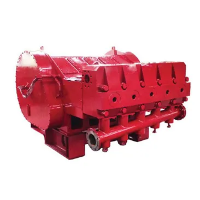
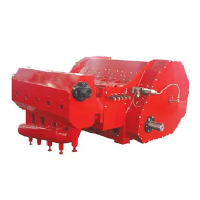
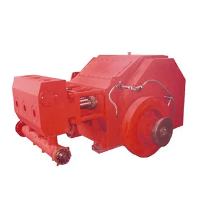
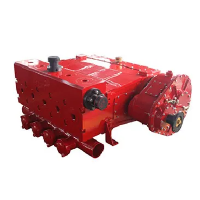
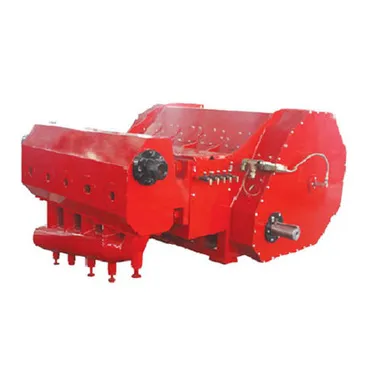

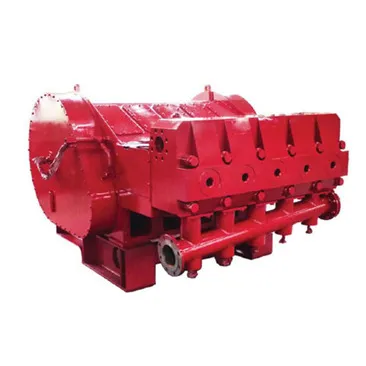
2500 Quintuple Plunger Pump
SPM Model QWS2500SD/4" Plunger Pump 2500 Quintuple Plunger Pump
The YOUKS plunger pump is designed for operations on oilfield acidizing and fracturing trucks. It maintains high-performance connecting rod load capacity required for operation even under harsh working conditions, such as shale gas fracturing operations. It adapts to severe field environments and can operate continuously and stably within an ambient temperature range of -20 ℃ to +50 ℃ and a relative humidity of no more than 90% at +20 ℃.
For fracturing truck service conditions in oilfields, the pump features continuous operation capacity: six working days per week, 10 hours of non-stop operation per day, an annual runtime of 3,000 hours, and 3 consecutive hours of full-power operation at maximum output.
When equipped with a 3.5-inch plunger, this plunger pump is capable of a maximum working pressure of 20,000 Psi. When fitted with a 6.75-inch plunger, it delivers a maximum displacement of 7,740 L/min. While the power end maintains the above performance ratings, Party A may install plungers of different sizes to suit various working conditions.
The plunger pump supplied by Party B shall be equipped with a complete set of systems and accessories required for standard normal operation.
Party B shall provide a list of regular wearing parts necessary for routine operation of the plunger pump.
Scope of Supply:
Complete plunger pump assembly for fracturing trucks;
Technical documentation for the plunger pump.
pecifications
| Power braking(Max) | 2,500HP (1,864KW) |
| Connecting rod Load(Max) |
192,325 lbf (855.5KN)
|
| Stroke | 8" (203.2mm |
| Driving Model | Double cylinder gear transmission |
| Speed ratio |
6.353:1
|
| LxWxHmm | 86.65*79.27*45.7 in.
(2,201*2,013*1,161mm)
|
| Weight | 16,093 lb (7,300Kg) |
Main Technical Parameters 2500 Quintuple Plunger Pump
- Performance Specifications of SPM Model QWS2500SD Plunger Pump
- Maximum Brake Power: 2,500 hp (1,866 kW)
- Maximum Connecting Rod Load: 192,325 Lbs (87,239 kg)
- Stroke: 8" (203.2 mm)
- Gear Ratio: 6.353 : 1
- Plunger Diameter: 4"
- Overall Dimensions (L × W × H): 2153 × 1877 × 1102 mm
- Approximate Net Weight: 16,000 lbs (7,257 kg)
Oilfield Professional Terminology Glossary
- acidizing and fracturing trucks
- shale gas fracturing
- connecting rod load ambient temperature relative humidity
- maximum brake power stroke
- gear ratio plunger diameter
- displacement power end complete pump assembly wearing parts
Technical Requirements (Specific Configuration for One Set of Plunger Pump)
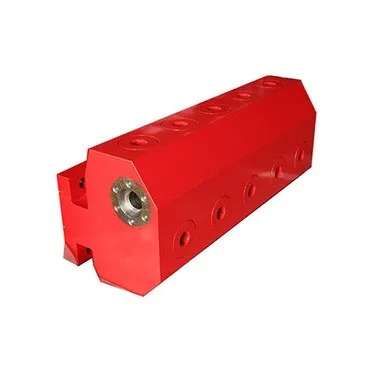
QWS2500SD Fluid End Assembly 1.1 QWS2500SD 2500 Quintuple Plunger Pump five-cylinder plunger pump fluid end assembly. Fluid cylinders are treated with strengthening processes, equipped with high-performance 4" RSL packing assemblies, valve assemblies and valve seats. 1.2 One 2"-1502 discharge port gauge connection gland, installed at the center top of the fluid cylinder. 1.3 One 3"-1502 discharge port flange on the right and one 2"-1502 safety valve port flange on the left (viewed from the power end toward the fluid end). 1.4 One set of 8" equal-diameter flanged suction manifold assembly fitted with a 3"-207 clean-out port.
QWS2500SD Power End Assembly 2.1 Equipped with a tachometer drive unit for pump speed detection. 2.2 Supplied with power end input flange and connecting bolts (drawings of the input flange shall be provided by the buyer).
After the equipment arrives at the buyer's factory, Party B shall dispatch professional technicians to the installation site to provide technical guidance for installation, commissioning and operator training.
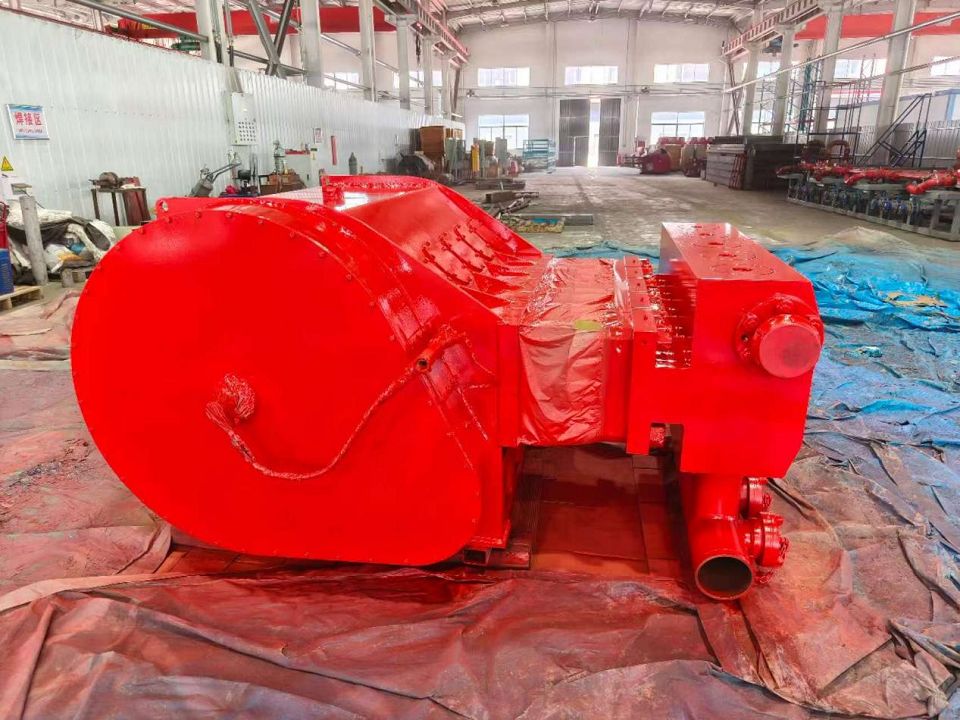
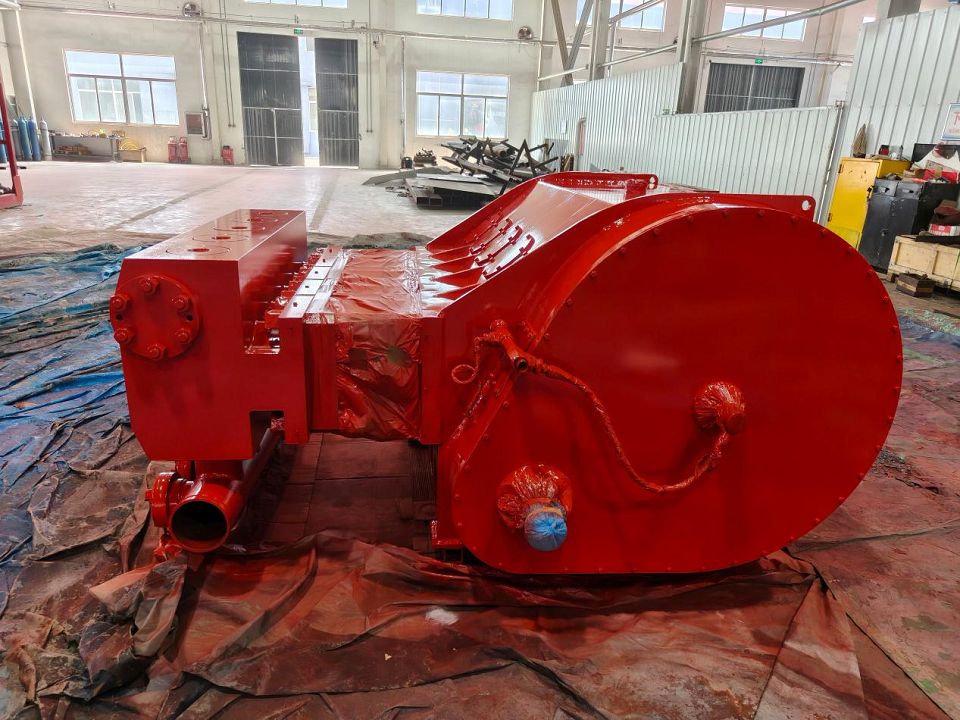
Plunger pump finish: Only primer paint shall be applied. Party B shall provide performance specifications for topcoat.
One complete set of standard maintenance tool kit.
One pump transport skid (transport base frame).
Lubrication Specifications 7.1 The power end of the plunger pump adopts gear pump forced lubrication; lubricating oil pressure shall not exceed 400 psi. 7.2 Lubricant for power end shall comply with the following requirements: suitable for ultra-high pressure working conditions, viscosity index ≥ 135, pour point ≤ -35°F, and operating oil temperature not exceeding 79°C. 7.3 The fluid end is fitted with a vertically mounted air-operated lubricator with a delivery rate of 12 oz/min, working pressure of 150 psi and pressure ratio of 40:1. 7.4 Recommended lubricants for fluid end: 7.4.1 For ambient temperature above 0°C: Shell Tonna V Oil #220 or Mobil Vactra Oil No.4. 7.4.2 For ambient temperature below 0°C: Shell Tonna V Oil #68 or Mobil Vactra Oil No.2.
Oilfield Standard Terminology
- fluid end
- power end
- packing assembly
- suction manifold
- clean-out port
- tachometer drive
- forced lubrication
- air-operated lubricator
- viscosity index
- pour point
- transport skid
- commissioning
Attached Documentation
- Factory standard inspection report and test report for SPM QWS2500SD/4" five-cylinder plunger pump.
- Operation and Maintenance Manual (with Chinese electronic version attached).
- One copy of Product Assembly Drawing.
Commissioning and Acceptance
The plunger pump shall be brand-new manufactured without any refurbished components.
After Party A receives the goods, representatives of Party A and Party B shall jointly carry out acceptance inspection, count all items listed on the packing list, and sign for confirmation by both parties.
Quality Warranty
WEIR SPM warrants that its products are free from defects in materials and workmanship at the time of installation, and undertakes to repair the products within a specified service life when operated in accordance with the procedures and instructions specified in the operator's manual.
Under normal operation and proper operating procedures, the warranty term of the plunger pump is 12 months counting from the delivery date of Party B (excluding wearing parts of the fluid end). If any quality defect is detected on non-routine wearing parts within the warranty period, Party A reserves the right to require Party B to provide free replacement of new parts and complete relevant repairs.
Within the warranty period, Party B shall respond to on-site inquiries and requests submitted by the user via phone or fax within 4 hours and put forward disposal proposals. In case of breakdowns or quality failures, Party B shall send service personnel to the site for troubleshooting within 48 hours upon receipt of the notification.
Youkes was founded in 2011, with a production workshop covering 35,000 square meters. It specializes in drilling, workover, cementing, high‑pressure pipe fittings and complete fracturing equipment, which are among our five core product lines. To date, we have served over 1 million customers worldwide, with export sales accounting for 48% of total annual revenue. The facility is equipped with more than 80 units each of large‑scale CNC lathes, automated robots and high‑precision mechanical‑processing machines.
Our factory has obtained ISO 9001, ISO 14001 and ISO 45001 management system certifications. This means traceable operating standards and records are maintained throughout every stage, from incoming raw‑material inspection and production‑process control to finished‑product tightness testing. All fracturing equipment, pump skids, spare parts and other items you receive undergo rigorous testing prior to factory delivery.


Hot Tags: 2500 quintuple plunger pump, China 2500 quintuple plunger pump suppliers, factory, 2800 Quintuple Plunger Pump, Quintuple plunger pump, QWS2500 pump, SQP2800 pump, Triplex plunger Pump
You Might Also Like
Send Inquiry