



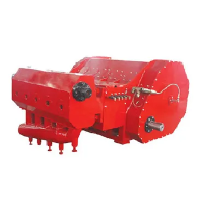

Skid-Mounted Cementing Pump Unit
Product Overview
The skid-mounted cementing pump unit is an integrated, heavy-duty surface system engineered for oil and gas well cementing operations. Designed for permanent rig integration or modular oilfield deployment in basins such as North American shale plays and Middle East harsh desert environments, the unit combines a high-pressure triplex or quintuplex cementing pump, a heavy-duty diesel engine, a mechanical or hydraulic transmission, and a precision mixing system onto a unified structural oilfield skid. It delivers continuous, high-pressure slurry injection and displacement for zonal isolation, wellbore sealing, and completion tasks under rigorous downhole conditions.
Key Features
Structural Durability: Built on a heavy structural steel skid with integrated lifting lugs, certified lifting points, and forklift pockets for multi-directional rig mobilization.
Operational Reliability: Utilizes heavy-duty industrial diesel engines paired with matching transmissions to ensure continuous torque delivery during extended pumping schedules.
Precision Slurry Control: Equipped with automated or manual recirculation mixing systems to maintain consistent slurry density (± 0.02 g/cm³) across varying job requirements.
Maintenance Accessibility: Modular layout provides unobstructed ground-level access to fluid end valves, packing assemblies, power end lubrication points, and filter elements for rapid field servicing.
Technical Specifications
|
Parameter |
Specification Range / Standard |
|
Max Working Pressure |
Up to 10,000 psi (69 MPa) |
|
Max Displacement Rate |
0.2 to 2.1 m³/min (depending on plunger size) |
|
Engine Power Rating |
400 HP to 1,000 HP (Tier II / Tier IV / Non-certified options) |
|
Transmission Type |
Heavy-duty powershift transmission or multi-speed mechanical gearbox |
|
Pump Type |
Single or dual triplex / quintuplex reciprocating positive displacement pumps |
|
Plunger Diameters |
4" to 5.5" interchangeable fluid end modules |
|
Skid Dimensions |
Customizable to rig floor or truck-bed footprint constraints |
|
Operating Temperature |
-40°C to +55°C winterized and tropicalized packages available |
Applications
Primary Cementing
Surface, intermediate, and production casing string cement placement.
Remedial Cementing
Squeeze cementing, plug abandonment, and casing repair operations.
Drilling Support
High-pressure fluid testing, pressure holding tests for blowout preventers (BOPs), and pipeline flushing.
Matching Requirements
Operates efficiently alongside bulk cement silos, batch mixers, and rig mud systems on onshore drilling pads or offshore modular rigs.
Materials & Configuration
Skid Frame: Structural alloy steel profile beams, sandblasted to Sa2.5, coated with marine-grade epoxy primer and polyurethane topcoat for corrosion resistance in harsh environments.
Fluid End Modules: Forged alloy steel or stainless steel, heat-treated to resist abrasive wear from heavy cement slurries (Class G/H with silica sand or heavyweight additives).
Power End Housing: Cast iron or fabricated steel casing featuring forced lubrication loops, oil coolers, and magnetic filtration.
Piping & Manifolds: High-pressure forged steel treating iron, union connections (fig 1502), and integral plug valves rated for abrasive service.
Quality Control
Raw Material Verification: Ultrasonic testing (UT) and chemical composition analysis conducted on all critical forgings (crankshafts, connecting rods, and fluid end blocks).
Machining Precision: CNC boring and milling performed in-house to maintain strict geometric tolerances on power end housings and plunger bores.
Hydrostatic Pressure Testing: Every assembled fluid end and high-pressure manifold undergoes factory hydro-testing at 1.5× maximum rated working pressure prior to coating and assembly.
Factory Acceptance Test (FAT): Full-load or no-load mechanical run test verifying engine-transmission-pump alignment, vibration levels, and hydraulic circuit integrity.
Customization & OEM
Power & Pumping Configuration
Tailored engine-pump matching to meet specific flow-pressure curves required by regional drilling depths.
Interface Compatibility
Customizable discharge manifold port sizes, suction connection locations, and remote control panel layouts.
Electrical & Control Systems
Explosion-proof (Ex-proof / ATEX / Class I Div 2) control enclosures, digital data acquisition systems, and manual backup linkages.
Regulatory Compliance
Engineering packages adaptable to DNV 2.7-1 lifting standards, ASME pressure vessel codes, and local oilfield electrical codes.
Packaging & Shipping
Protection Standards: Openings, flanges, and high-pressure ports sealed with threaded metal protectors or blind flanges; internal fluid systems drained and inhibited against corrosion.
Lifting & Securing: Skid secured inside high-cube flat rack containers or lashed directly to breakbulk vessel decks using certified heavy-duty tie-down chains and blocking.
Documentation Bundle: Shipped with comprehensive factory test reports, material mill test certificates (MTC), dimensional general arrangement (GA) drawings, and maintenance manuals.
FAQ
Q: Can the unit handle abrasive heavyweight cement slurries containing hematite or barite?
A: Yes. The fluid ends are equipped with hardened alloy steel or ceramic-coated plungers and abrasion-resistant valve inserts designed specifically for high-solid abrasive slurries.
Q: How do I select the correct plunger size for my pressure and rate requirements?
A: Plunger selection depends on the maximum operating pressure and desired displacement. Smaller plungers (4") achieve higher pressures at lower rates, while larger plungers (5.5") deliver higher volumetric rates at lower pressures. Consult our engineering team with your well parameters for precise sizing.
Q: What certifications are available for the engine and electrical components?
A: Standard units feature industrial diesel engines compliant with regional emission regulations (Tier II / Tier IV final). Explosion-proof electrical packages meeting ATEX or Class I Div 2 standards can be integrated upon request.
Q: What is the standard lead time for a customized skid-mounted cementing unit?
A: Standard configurations typically require 12 to 16 weeks. Highly customized units involving specialized engines, certifications, or specific skid footprints may require 18 to 24 weeks.
Q: Are critical replacement parts readily available?
A: We maintain stock of high-wear consumable parts, including plungers, valves, seats, packing sets, and filter elements, to ensure rapid dispatch and minimal field downtime.
Q: Does the unit support remote operation from a centralized data cabin?
A: Yes. Units can be configured with electronic control modules that transmit pressure, rate, and density data via communication protocols to remote rig data vans.
Request a Quote
To enable our engineering team to provide an accurate technical proposal and commercial quotation, please provide the following details:
Required Operating Parameters: Maximum working pressure (psi or MPa) and target displacement rate (bpm or m³/min).
Power Source Preference: Desired engine brand, emission tier, or power rating (HP).
Operational Environment: Ambient temperature range and whether winterized or offshore corrosion protection is required.
Compliance Standards: Specific regional certifications (e.g., API 6A/16C, DNV, ATEX).
Quantity & Delivery Timeline: Required unit count, target delivery port, and project schedule.
Supporting Documentation: Any existing P&ID diagrams, rig integration constraints, or technical specification sheets.
[Download PDF Specification Sheet]
[Request 2D/3D CAD Drawing Package]
Hot Tags: skid-mounted cementing pump unit, China skid-mounted cementing pump unit suppliers, factory
Previous
No InformationYou Might Also Like


Send Inquiry