



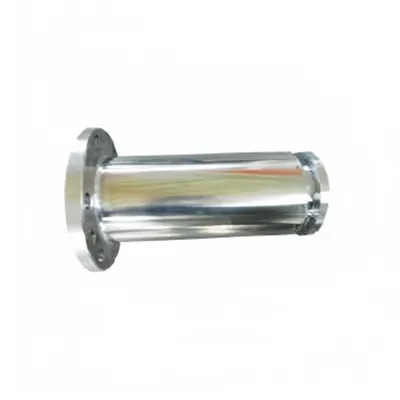
Cementing Pump Valve Assembly
Product Overview
The Cementing Pump Valve Assembly controls fluid intake and discharge under high cyclic pressures during oilfield cementing operations. Built to withstand abrasive slurries (slurry weights up to 20+ ppg) and corrosive chemical additives at pressures up to 15,000 PSI. Precision-machined tapers and matched seats ensure positive sealing and minimize fluid bypass during continuous high-stroke operations.
Key Features
Abrasion Resistance: Carburized alloy steel bodies and high-durometer polyurethane (PU) or NBR inserts resist cutting and extrusion from solid-laden cement slurries.
Operational Reliability: Guided valve design reduces lateral movement, preventing uneven wear on seating surfaces during high-frequency pressure pulses.
Easy Maintenance: Drop-in replacement design allows rapid field changeouts using standard hand tools, minimizing rig non-productive time (NPT).
Technical Specifications
|
Technical Parameter |
Specification / Range |
|
Standard Working Pressure |
5,000 PSI to 15,000 PSI (35 MPa to 103 MPa) |
|
Operating Temperature (PU) |
(-20^\circ\text{C}) to (+100^\circ\text{C}) |
|
Operating Temperature (HNBR) |
(-30^\circ\text{C}) to (+150^\circ\text{C}) |
|
Compatible Fluid Medium |
Neat cement, weighted cement slurries, spacer fluids, acid wash |
|
Dimensional Standard |
API Spec 7K / OEM Fluid End Interoperable |
|
Supported Pump Brands |
Gardner Denver, Halliburton, Schlumberger, SPM, SJ Petro, etc. |
|
Connection Types |
Wing-guided, full-open, or cross-arm configurations |
Applications
Cementing Operations: Surface and deep-well primary casing cementing, liner cementing, and squeeze cementing.
Equipment Compatibility: Triplex and quintuplex cementing pumps, skid-mounted cementing units, and offshore cementing skids.
Materials & Configuration
Valve Body & Seat
Forged alloy steel (AISI 8620 / 20CrMnTi), vacuum carburized to case depth 1.5–2.2 mm.
Surface Hardness
HRC 58–62 for wear surfaces; core hardness maintained at HRC 35–45 for impact toughness.
Valve Insert
Polyurethane (PU) molded with high tear resistance, or bonded rubber for specific fluid compatibility.
Configuration Options
Full-open type (allows easy pigging and high flow rates)
Wing-guided type (provides stable guidance under high flow turbulence)
Quality Control
Metallurgical Inspection: Spectrometer material verification performed on incoming alloy steel forgings.
Heat Treatment Monitoring: Automated furnace temperature logging to ensure uniform case depth and hardness gradient.
Dimensional Verification: 100% check of critical sealing angles and outer diameters using coordinate measuring machines (CMM) and API-compliant plug/ring gauges.
Pressure Testing: Hydrostatic shell and seat leakage testing executed per API guidelines prior to protective packaging.
Customization & OEM
Model Matching: Cross-reference available for OEM part numbers based on pump model and fluid end module drawings.
Custom Interfaces: Non-standard seat outer diameters or specialized insert elastomer compounds (e.g., FKM for harsh chemical resistance) engineered upon drawing review.
Traceability: Laser-etched heat numbers and part codes on each valve body and seat for full material lot tracking.
Packaging & Shipping
Corrosion Protection: Treated with heavy-duty rust-preventative oil and sealed in VCI (Volatile Corrosion Inhibitor) poly bags.
Packaging: Heavy-duty corrugated cartons packed in export-grade fumigation-free wooden crates or plywood boxes.
Delivery: Ex-works, FOB, or CIF shipping terms available via sea or air freight from major manufacturing hubs.
FAQ
Q: Are these valve assemblies interchangeable with OEM pump parts?
A: Yes. Dimensions and taper angles match standard API fluid end modules, allowing direct drop-in installation without housing modifications.
Q: What is the standard material used for the valve body and seat?
A: Forged AISI 8620 / 20CrMnTi alloy steel, vacuum carburized to achieve a surface hardness of HRC 58–62.
Q: Which insert material should I select for high-temperature slurries?
A: Use HNBR inserts for continuous operating temperatures up to (150^\circ\text{C}). Standard polyurethane is recommended for applications below (100^\circ\text{C}).
Q: What is the typical service life of the valve assembly?
A: Service life depends on slurry abrasiveness, pump stroke rate, and operating pressure. Field data indicates an average operational window of 150 to 300 pumping hours under standard well conditions.
Q: Do you provide mill test certificates (MTC)?
A: Yes. EN 10204 3.1 material and inspection test reports are supplied with every shipment.
Q: What is the minimum order quantity (MOQ) for custom valve sizes?
A: MOQ varies by forging die availability. Standard sizes have no strict MOQ for stock items, while custom configurations require batch evaluation.
Request a Quote
To receive a precise technical proposal and commercial quotation, please submit your requirements below:
Pump Model & Brand: (e.g., Gardner Denver TWS2000, SPM, etc.)
Part Number or Drawing: (OEM reference if available)
Operating Parameters: (Working pressure, pump stroke rate, fluid type/temperature)
Required Quantity: (Annual consumption or per-batch order volume)
Destination Port: (For freight calculation)
Hot Tags: cementing pump valve assembly, China cementing pump valve assembly suppliers, factory
Previous
No InformationYou Might Also Like



Send Inquiry